
Differences Between Small Character and Large Character Inkjet Printers
Inkjet printing technology has become a cornerstone in modern manufacturing and packaging industries. It enables businesses to mark products efficiently with essential information such as batch numbers, production dates, barcodes, and logos. Among the most commonly used types are small character and large character inkjet printers, each serving specific purposes and offering unique advantages depending on the application. Understanding the differences between these two types of printers helps companies choose the right equipment for their production needs.
Printing Size and Resolution
One of the main differences between small character and large character inkjet printers is the print size and resolution. Small character inkjet printers are designed to print fine, detailed information, typically ranging from 1 to 5 millimeters in height. These printers can produce clear alphanumeric text, barcodes, and logos on small or irregular surfaces, making them ideal for products like bottles, vials, and electronic components. Many industries rely on high-quality models such as the Small Character Inkjet Printer for this level of precision and consistency.
In contrast, large character inkjet printers produce bigger text, usually between 10 to 50 millimeters in height. They are mainly used for printing larger information such as expiration dates, batch codes, or promotional messages directly on boxes, cartons, or pallets. Due to their larger print size, these printers are better suited for applications where visibility from a distance is essential, such as in warehouses or shipping operations.
Printing Speed
Another significant difference is printing speed. Small character inkjet printers are optimized for high-speed production lines, printing small and detailed markings without slowing down the manufacturing process. They can maintain legibility even on fast-moving products, making them suitable for industries with tight production timelines, such as food and beverage or pharmaceuticals.
Large character printers, while capable of printing on large surfaces, generally operate at a slower speed relative to small character printers. They prioritize size and visibility over fine detail, which may result in slightly lower production throughput. However, this is not a disadvantage in packaging applications where speed requirements are moderate and the information needs to be easily visible.
Types of Ink and Surfaces
Small and large character inkjet printers also differ in the types of ink they use and the surfaces they can print on. Small character printers often use solvent-based, water-based, or UV-curable inks, allowing them to print on a wide range of materials, including plastics, glass, metal, and coated paper. Their versatility in ink types ensures long-lasting, smudge-resistant markings even on challenging surfaces.
Large character printers, on the other hand, typically use fast-drying solvent inks designed for porous and non-porous surfaces such as cardboard, corrugated boxes, and pallets. The focus is on durability and readability over long distances rather than fine detail. These printers are usually used in shipping, logistics, and bulk packaging environments.
Applications and Use Cases
Small character inkjet printers are commonly used in industries that require detailed and precise marking. Food and beverage manufacturers rely on them for printing expiration dates and batch numbers on bottles and cans. Pharmaceutical companies use them to mark vials, blister packs, and boxes for regulatory compliance. Electronics manufacturers use these printers for component identification and traceability, ensuring each item is accurately labeled.
Large character printers are favored for applications where high visibility is more important than small details. They are commonly used to mark boxes, crates, and pallets in warehouses. Expiration dates, lot numbers, and promotional information are printed on shipping containers and packaging materials. Their larger characters are easy to read from a distance, which is helpful in logistics and retail settings.
Maintenance and Operational Considerations
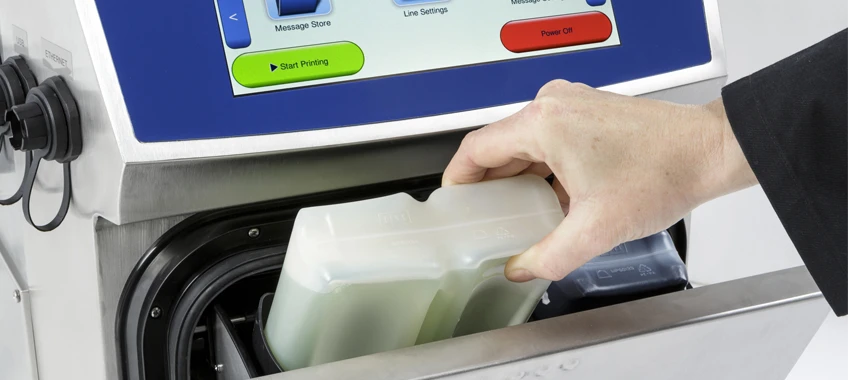
Maintenance requirements also differ between small and large character printers. Small character inkjet printers require careful cleaning of the printhead and proper ink management to prevent nozzle clogs. Regular calibration and monitoring are crucial to maintain high-resolution output.
Large character printers are generally easier to maintain, as they operate with larger nozzles and more robust ink systems. While they require less frequent cleaning, regular checks and ink refills are still necessary to ensure consistent print quality.
Cost and Investment
The cost of these printers varies according to their capabilities. Small character printers tend to have a higher initial investment due to their precision, speed, and advanced features. However, they deliver long-term value in industries requiring detailed and accurate marking. Large character printers are usually more affordable and are cost-effective for applications that prioritize large, visible markings over fine detail.
Conclusion
Both small character and large character inkjet printers serve essential roles in industrial and commercial operations, but they cater to different printing needs. Small character printers focus on precision, fine detail, and high-speed marking on diverse surfaces, while large character printers excel in visibility, simplicity, and bulk packaging applications. By understanding the differences in print size, speed, ink compatibility, and applications, businesses can choose the right printer for their specific production requirements. Investing in the appropriate type ensures efficiency, compliance, and product traceability across manufacturing and logistics processes.