
Grilles and Diffusers Manufacturers Guide: Materials, Design, and Quality
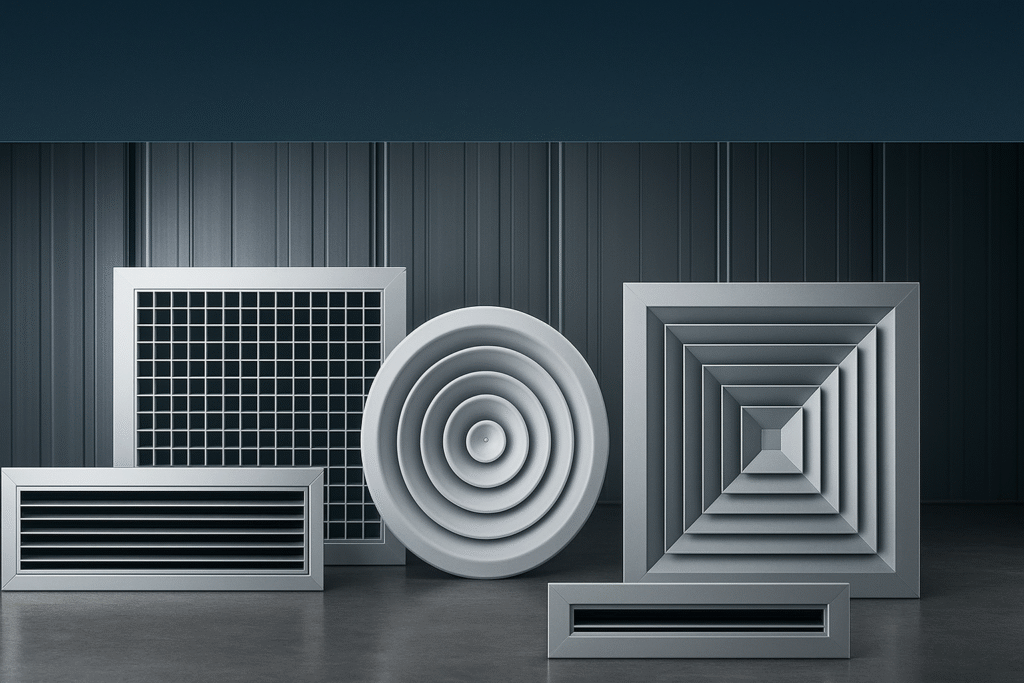
Grilles and diffusers are essential components in HVAC systems, responsible for controlling how air is delivered, circulated, and returned within indoor environments. Although they may seem like simple accessories, their performance directly impacts airflow efficiency, energy consumption, and occupant comfort. For this reason, selecting the right manufacturer is a critical step in any HVAC project.
Understanding grilles and diffusers manufacturers helps engineers, contractors, and building owners evaluate product quality, design capabilities, and material standards to ensure reliable HVAC system performance.
The Role of Grilles and Diffusers in HVAC Systems
Grilles and diffusers work together to manage air movement within a building, but they serve different functions.
- Grilles handle air return and exhaust, allowing air to flow back into the HVAC system while protecting duct openings.
- Diffusers distribute conditioned air evenly into a space, ensuring comfort and consistent temperature control.
Manufacturers play a key role in ensuring both components function efficiently and reliably under different operating conditions.
Importance of Material Selection
Material choice is one of the most important factors in determining product durability and performance.
Common Materials Used by Manufacturers
- Aluminum: Lightweight, corrosion-resistant, and widely used in commercial applications
- Galvanized steel: Strong and durable, suitable for industrial environments
- Plastic (ABS or PVC): Cost-effective and commonly used in residential systems
High-quality manufacturers carefully select materials based on environmental conditions, airflow requirements, and project specifications.
Impact of Material Quality
Good materials ensure:
- Longer product lifespan
- Stable airflow performance
- Resistance to corrosion and wear
- Reduced maintenance requirements
Design Considerations in Manufacturing
Design plays a major role in how effectively grilles and diffusers perform in HVAC systems. Manufacturers focus on both functionality and aesthetics.
Functional Design Features
- Optimized airflow direction and distribution
- Reduced pressure drop for energy efficiency
- Noise control for indoor comfort
- Balanced air mixing in occupied spaces
Aesthetic Design Features
- Slim and modern profiles for architectural integration
- Custom finishes to match interior designs
- Concealed or minimalistic installation options
Well-designed products improve both system performance and visual appeal.
Types of Grilles and Diffusers Produced by Manufacturers
Reliable manufacturers offer a wide range of products to meet different HVAC needs.
Common Grille Types
- Fixed blade grilles
- Adjustable blade grilles
- Return air grilles
- Door transfer grilles
Common Diffuser Types
- Ceiling diffusers
- Linear slot diffusers
- Swirl diffusers
- Jet diffusers
- Floor diffusers
A broad product range ensures flexibility for residential, commercial, and industrial applications.
Quality Standards in Manufacturing
Quality control is essential for ensuring consistent performance and reliability in HVAC systems.
Key Quality Practices Include:
- Raw material inspection before production
- Precision machining and assembly
- Airflow performance testing
- Final inspection and packaging checks
Manufacturers that follow strict quality control processes deliver more reliable and consistent products.
Compliance with Industry Standards
Reputable manufacturers adhere to international HVAC and quality standards to ensure safety and performance.
Common Standards Include:
- ASHRAE guidelines for airflow and ventilation
- ISO quality management systems
- Local building and safety regulations
Compliance ensures that products meet global performance expectations and can be used in a wide range of projects.
Innovation in Grille and Diffuser Design
Modern manufacturers continuously improve product performance through innovation and engineering development.
Recent Innovations Include:
- Low-noise airflow structures
- Energy-efficient air distribution designs
- Improved aerodynamic blade configurations
- Enhanced airflow control systems
Innovation helps improve HVAC efficiency while meeting modern architectural demands.
Customization Capabilities
Many HVAC projects require customized solutions, and experienced manufacturers provide flexible options.
Customization may include:
- Non-standard sizes and dimensions
- Special airflow direction designs
- Custom finishes and colors
- Application-specific configurations
Customization ensures better system integration and performance optimization.
Importance of Manufacturing Consistency
Consistency is especially important for large-scale HVAC installations where multiple units are used.
Reliable manufacturers ensure:
- Uniform product quality across batches
- Stable airflow performance
- Standardized production processes
- Reduced variation in system performance
This helps maintain balanced airflow throughout entire buildings.
Conclusion
Grilles and diffusers manufacturers play a vital role in ensuring HVAC system efficiency, comfort, and reliability. From material selection and design innovation to strict quality control and industry compliance, every aspect of manufacturing affects final system performance.
By understanding grilles and diffusers manufacturers, engineers and project managers can make informed decisions that lead to better airflow distribution, improved energy efficiency, and long-term HVAC system reliability across all types of applications.